
Inside Modified Blueberries: What Modified Grapes × Blueberry F5 Actually Tells Us
A confirmed-lineage project file on Modified Blueberries—and a clear boundary between what the name reveals and what only the selected flower can prove.

Modified Blueberries begins with a clean equation: Modified Grapes × Blueberry F5. That is the confirmed lineage attached to the live Illest Haze flower. It is also where responsible interpretation has to begin—not with imagined breeder lore, not with effect predictions, and not with a family tree invented after the fact.
The live batch is described as dense, resinous living-soil flower with a blueberry candy-gas nose and taste. Four current product photographs document the selected release. Beyond those confirmed facts, the right move is not to fill gaps with folklore. It is to explain what the lineage notation can reasonably tell us, what it cannot, and why the actual selected expression still matters more than the name on the branch.
The confirmed project file
Here is the full set of facts currently supported by the Illest Haze catalog:
- Cultivar: Modified Blueberries.
- Listed cross: Modified Grapes × Blueberry F5.
- Cultivation: living soil.
- Current description: dense, resinous flower with a blueberry candy-gas nose and taste.
- Format: micro-batch living-soil THCA flower.
- Status at research time: live product page with synced inventory.
That may look simple, but it already gives readers three useful layers: the named parents, a filial-generation notation on one parent, and the selected batch’s documented aromatic direction.
Everything else needs a label.
What the “×” means—and what it does not
The cross symbol tells us that the catalog identifies Modified Grapes and Blueberry F5 as the parental lines behind Modified Blueberries. It does not tell us:
- which parent supplied pollen;
- the breeder or original selection history of either parent;
- how many seedlings were evaluated;
- what traits were selected or rejected;
- whether the released plant came from seed, clone, or another propagation path;
- whether every plant carrying the same name would present identically.
Those are meaningful project details, but they are not currently confirmed on the live site or in Admin OS. They do not belong in the article as fact.
This boundary matters because cannabis names often carry more confidence than the underlying documentation can support. A peer-reviewed review of cannabis breeding warns that cultivar identity cannot reliably be inferred from a name alone; genetically similar material can carry different names, while material sold under one name can show meaningful genetic differences.
That does not make names useless. It makes documentation, selection, and batch-level observation more important.
What “F5” usually signals
In plant-breeding notation, F refers to a filial generation. F1 is the first generation produced from a parental cross. Subsequent generations—F2, F3, F4, F5—describe continued generational advancement.
So “Blueberry F5” ordinarily signals that the Blueberry line was identified at the fifth filial generation.
That is useful context, but F5 is not a universal quality grade and not a certificate of perfect genetic uniformity. The notation alone does not tell us the population size, selection pressure, mating design, degree of inbreeding, or measured stability of specific traits.
The distinction is especially important in Cannabis sativa. USDA’s hemp germplasm work describes the crop as genetically complex, typically wind-pollinated, and challenging to maintain without careful isolation. USDA researchers use controlled environments, phenotyping protocols, and germplasm records precisely because a generation label cannot replace observation.
Read “F5” as a clue about generational work—not as permission to invent the work that occurred.
Lineage is a map; phenotype is the destination
The parent names create expectations. Modified Grapes points toward one aromatic and structural lane. Blueberry F5 points toward another. The selected Modified Blueberries batch is where those possibilities become a real object.
The current catalog’s language is specific:
- blueberry supplies the clearest fruit reference;
- candy suggests a bright, sweet aromatic layer;
- gas adds a sharper, heavier counterpoint;
- dense and resinous describes visible and tactile flower characteristics without making a potency claim.
That combination is more useful than a generic “fruity strain” label. Blueberry without contrast can flatten into sweetness. Gas without fruit can dominate. The live description positions the selected flower at the collision point: blueberry candy first, gas as the pressure underneath.
Why selection matters more than family-tree math
A cross is not a fifty-fifty flavor formula. Genes recombine. Traits segregate. Environment shapes expression. Selection determines which individual is advanced.
Research on cannabis genetics and breeding emphasizes the size of the available phenotypic range, including differences in architecture, flowering behavior, resin-related traits, and secondary-metabolite profiles. USDA’s current phenotyping handbook exists to help researchers describe those traits consistently enough to make meaningful selections.
For readers, the practical lesson is simple: parental names explain the field of possibility. The selected phenotype explains the product in front of you.
That is why the project file should prioritize:
- the confirmed cross;
- the selected batch’s documented characteristics;
- current photography;
- batch-matched documentation;
- future journal updates only when new project facts are confirmed.
The lineage creates the headline. Selection earns it.
Living soil belongs in the file—but not in the pedigree
The product page identifies the live Modified Blueberries batch as living-soil flower. That is a cultivation fact, not a genetic one.
Keeping those categories separate improves the story:
- genetics describes inherited potential and the named lineage;
- selection describes the individual expression chosen from that potential;
- cultivation describes how the selected plant was grown;
- post-harvest handling influences how the finished flower presents after harvest.
Collapsing all four into the word “strain” makes the product sound simpler than it is. A professional project journal keeps each layer visible.
Illest Haze’s micro-batch flower field guide explains how living-soil cultivation and tighter batch control fit into the broader production standard. It does not prove what Modified Blueberries inherited from either parent. It tells us how this live selection was cultivated.
What the photographs add
The current product page carries four batch photographs. They are not decorative stand-ins; they are the visual record available to the buyer.
Photography can help a reader examine visible structure, trim, surface resin, color, and consistency across the pictured material. It cannot confirm aroma, taste, cannabinoid content, contaminant status, or the experience of every unit in the batch.
That is why good product storytelling uses images as evidence without making them do laboratory work.
The questions this journal will not fake
There are obvious questions a genetics audience may want answered:
- Who made the original cross?
- Why was this specific plant selected?
- How many expressions were evaluated?
- Which parent dominated structure?
- Which traits repeated across the population?
- Will the project continue into another generation?
Those are excellent questions. They remain open until Illest Haze confirms the answers.
The same rule applies to potency, effects, medical outcomes, and laboratory data. None should be inferred from lineage language, resin visible in a photograph, or the phrase “F5.”
Precision does not kill the hype. It makes the hype durable.
The read on Modified Blueberries
Modified Blueberries is compelling because the confirmed story is already coherent. Modified Grapes × Blueberry F5 sets the genetic frame. The selected living-soil batch pushes a blueberry candy-gas profile. The photography documents dense, resinous flower. The product page is live.
No mythology is required.
The loudest line in this project file is also the cleanest: fruit at the top, gas underneath, and a selected expression strong enough to carry its own name.
View the live Modified Blueberries batch and use the current product page—not an old screenshot—as the source of truth for formats, availability, and batch information.
 2026
2026 2026
2026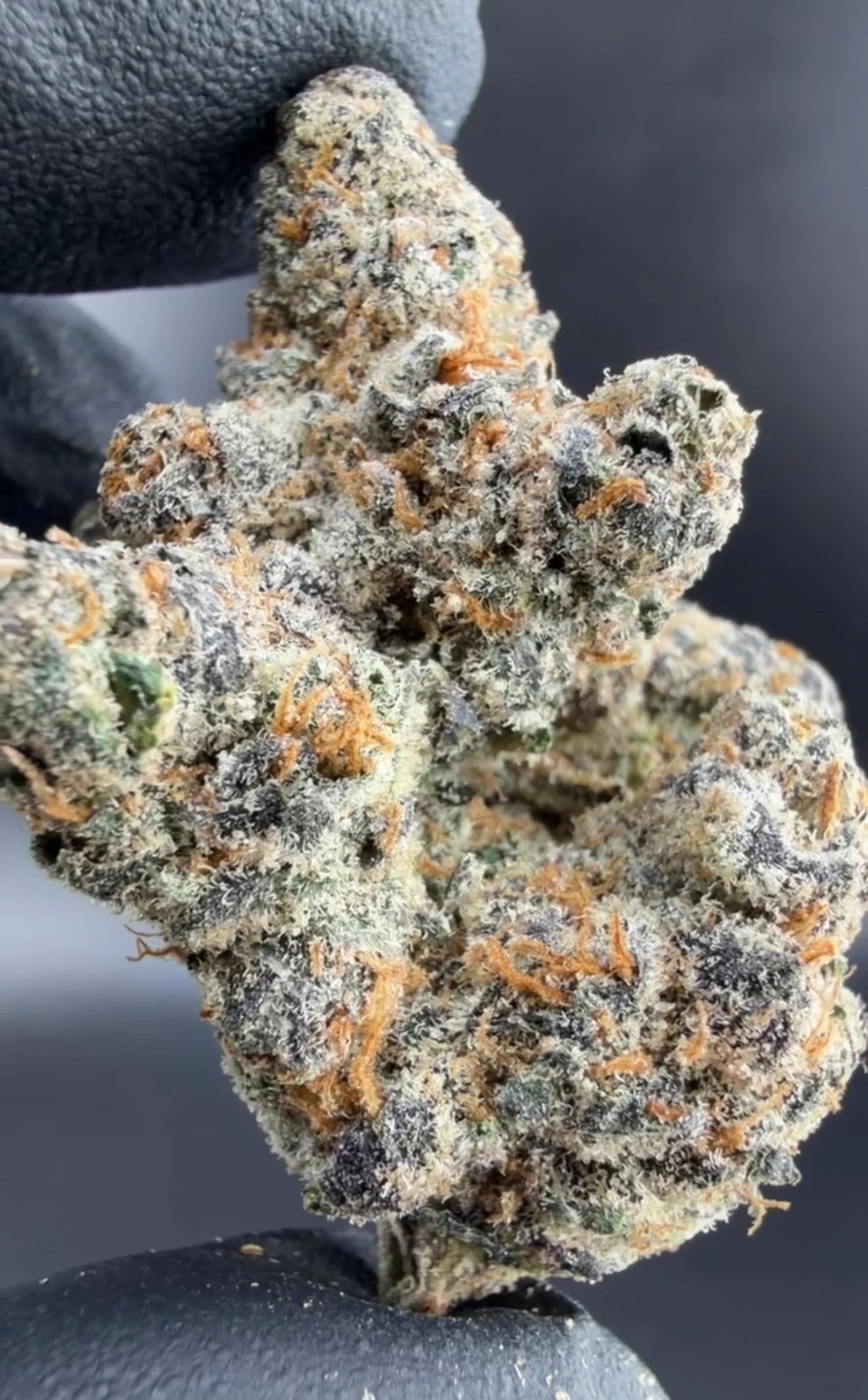 2026
2026