
Cold-Cure Hash Rosin, Explained: Texture, Storage, and What the Label Cannot Prove
Cold cure describes a post-press approach used to change hash rosin consistency. It can describe texture, but it does not prove potency, purity, safety, or grade.
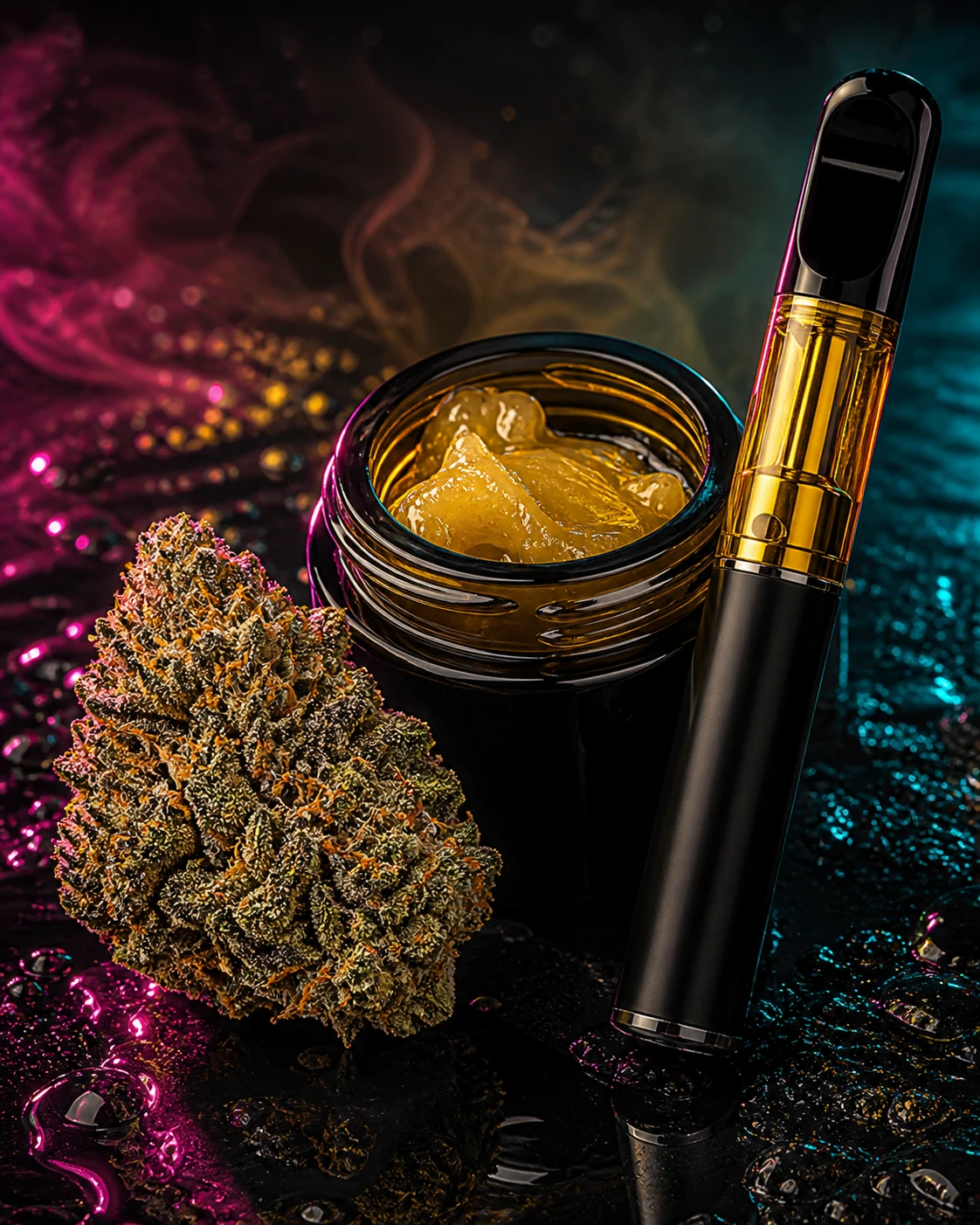
Cold cure is a post-press handling approach used to change hash rosin from a fresh, often translucent press into a more uniform, opaque, and scoopable consistency. The term describes process and texture. It is not a legal grade, a laboratory result, or automatic proof of potency, purity, safety, or “six-star” quality.
That is the short answer buyers need. The longer answer is useful because concentrate language gets compressed fast. “Fresh frozen,” “hash rosin,” “cold cure,” and “six star” describe different parts of the story. When a page stacks them together, each label still has its own job.
Start with the production sequence
A simplified hash rosin sequence looks like this:
- Plant material is harvested and preserved.
- Trichome heads are separated from the plant material, commonly through ice-water separation.
- The collected hash is dried.
- Heat and pressure press the hash into rosin.
- The fresh press is packaged or handled into another consistency, such as cold cure.
Cold cure lives at step five. It does not describe cultivation, freezing, washing, drying, or pressing by itself. It describes what happens to the rosin after the press.
In common industry use, fresh rosin is sealed and held under controlled, relatively cool conditions while its internal chemistry and physical structure change. The producer may mix, fold, or “whip” the material to create a more consistent texture. Exact time and temperature choices vary, and there is no single federal cold-cure specification.
Why the texture changes
Rosin is a complex mixture rather than one uniform substance. Cannabinoids, aromatic compounds, minor constituents, microscopic crystal formation, and handling conditions all influence consistency. As a sealed jar rests, the material can separate, nucleate, and reorganize. Agitation can distribute those phases into a more uniform appearance.
The familiar result is often opaque, creamy, badder-like, or dough-like. But appearance varies by cultivar, input material, moisture, press conditions, storage, and the producer’s method. “Cold cure” does not require every jar to look identical.
That is why buyers should treat texture as an observation—not a verdict. A wet-looking jar is not automatically better. A drier-looking jar is not automatically ruined. A photo cannot prove the jar’s aroma, handling history, composition, or test result.
Cold cure vs. fresh press
Fresh press is rosin collected and packaged close to the time it leaves the press, before an intentional cure transforms the consistency. It may look translucent, glassy, sappy, or taffy-like depending on the material and temperature.
Cold cure is allowed to develop into a more stable, homogenized texture before release. Buyers often find it easier to portion because it is less likely to stretch like warm taffy, but that is a practical handling difference—not a universal quality ranking.
Fresh press also asks more from cold storage and temperature discipline. If a producer sells a true fresh-press jar, follow that product’s storage instructions. Do not assume advice written for a cold-cure jar transfers perfectly.
Cold cure vs. jam
“Jam” generally describes a different texture-development route that uses warmer conditions to encourage crystal formation and a liquid aromatic phase. The finished product may show visible crystals suspended in a syrup-like layer.
Cold cure usually aims for a more uniform badder-like consistency. Jam often emphasizes a separated crystal-and-sauce presentation. Neither label is federally standardized, and producers do not all use the terms identically.
The best product page should name the consistency, show current-batch media, and avoid pretending texture alone certifies the entire product.
What cold cure can tell you
Used carefully, the label can communicate a few real things:
- the rosin received intentional post-press handling;
- the producer expected a cured rather than untouched fresh-press texture;
- the jar should be read as a concentrate consistency, not a cultivar or potency claim;
- storage and temperature can still change what the buyer sees after release.
That is useful context. It helps set expectations before the jar arrives.
What cold cure cannot prove
Cold cure does not prove:
- cannabinoid or terpene potency;
- the absence of contaminants;
- medical or therapeutic effects;
- safety for a specific person;
- cultivar identity or breeder history;
- fresh-frozen input;
- six-star grade;
- wash quality, micron range, or yield;
- correct storage at every point in the supply chain.
Those questions require their own evidence. A batch report may answer some composition and contaminant questions, depending on what was tested and how the sample was handled. Cultivar provenance requires a documented source. Fresh-frozen handling requires a production record. One adjective cannot do every job.
How Illest Haze uses the term
Current Illest Haze rosin pages, including Honey Banana (6★), Black Zushi (6★), and Blue Zushi (6★), describe a glossy cold-cure texture.
That language tells buyers the intended jar consistency. The separate “fresh-frozen” label describes the handling of harvested input material before extraction. The “hash rosin” label describes the concentrate route. The “six-star” label is a traditional quality shorthand. Each term should be read separately.
Browse the live hash rosin collection for current options, images, and inventory.
Storage after delivery
Storage guidance should protect the product without turning into ritual:
- Keep the jar sealed when you are not using it.
- Limit unnecessary warmth, light, air exposure, and repeated temperature swings.
- Follow the specific product or producer instructions.
- If a cold jar has been stored at a low temperature, allow the sealed container to approach the recommended handling temperature before opening; that can reduce condensation risk.
- Use clean tools and avoid leaving the lid open while deciding what to do next.
Do not apply heat aggressively to “fix” a texture you dislike. Temperature can permanently change aromatic and physical characteristics. If a jar arrives in a condition that appears inconsistent with the listing, document it and contact Illest Haze support.
How to read a cold-cure product page
Look for a complete stack:
- The exact product and cultivar name.
- The concentrate type: hash rosin, not just “extract.”
- The input handling claim, if stated: fresh frozen or otherwise.
- The consistency: cold cure, fresh press, jam, or another clearly defined texture.
- Current-batch images.
- Live size, price, and inventory options.
- Available batch documentation and what it actually tests.
- Storage and support information.
If the page supplies only a luxury adjective and a price, it has not done enough.
FAQ
Is cold-cure hash rosin solventless?
Hash rosin is produced mechanically from hash using heat and pressure rather than hydrocarbon solvents. “Cold cure” describes what happens after pressing; it is not the reason the product is called solventless.
Does cold cure mean the rosin was never warm?
No. Rosin pressing uses heat, and “cold” is relative industry language for the post-press cure. It does not mean the material remained at refrigerator temperature through every step.
Is cold cure stronger than fresh press?
The label does not establish potency. Strength questions require batch-specific analytical data, and individual response is not predicted by texture alone.
Is a glossy jar automatically six star?
No. Appearance is one observation. Six-star is a separate traditional grade shorthand, not something gloss can prove.
Should cold cure stay refrigerated?
Follow the producer’s instructions for the specific jar. In general, sealed, cool, dark, stable storage helps protect consistency and aroma, while long exposure to heat and air accelerates change.
The buyer’s bottom line
Cold cure is useful language when it stays in its lane. It tells you to expect an intentionally cured rosin texture—often uniform, opaque, and scoopable. It does not certify the cultivar, the test result, or the entire quality story.
Read the texture. Then read the rest of the page. For the adjacent terms, continue with Fresh Frozen, Explained, Six-Star Hash Rosin, Decoded, and Hash Rosin Jar vs. Rosin Vape.
 2026
2026 2026
2026